A
triangle is a fundamental geometrical shape that consists of three sides and three angles. It is a polygon with the fewest possible
number of sides, making it one of the simplest and most basic shapes in geometry. Triangles are widely studied and used in various fields such as mathematics, architecture, engineering, art, and even nature.
The sides of a
triangle are defined by three
line segments, and the place where they meet
forms the vertices of the triangle. The vertices are represented by capital
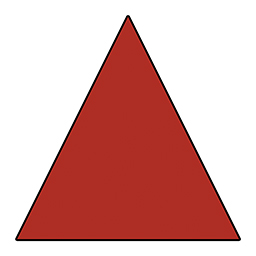
letters such as A, B, and C. Each line segment connecting two vertices is called a side. The lengths of the sides can vary, which leads to different types of triangles such as equilateral, isosceles, and scalene.
The angles within a
triangle are formed by the intersection of the sides, and they are represented by small
letters like a, b, and c. The sum of the interior angles of any triangle always equals 180 degrees. This property is known as the
Triangle Angle Sum Theorem.
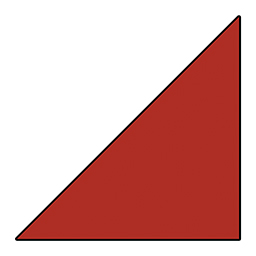
Triangles have several unique properties and characteristics that contribute to their significance and application in various fields. For example, the Pythagorean Theorem specifically applies to right-angled triangles, which states that the square of the hypotenuse is equal to the sum of the squares of the other two sides.
In architecture and engineering, triangles play a crucial role in providing stability and strength to structures. The triangular shape is inherently rigid, making it structurally sound and less prone to collapse or distortion. This is evident in bridges, towers, and roof designs, where triangles are commonly used to distribute forces evenly and to support heavy loads.
Triangular shapes are also often seen in art and design. Artists use triangles to create compositions, balance, and visual interest. It is a versatile shape that can be used to represent stability, strength, and harmony. In graphic design, triangles are used to divide space, create emphasis, and give a sense of dynamism.
Additionally, triangles can be found extensively in nature. From the shape of leaves and flower petals to the structure of crystals and the scales of reptiles, triangles are abundant in the natural world. This is because the triangular shape allows for efficient use of space and optimal distribution of resources.
In conclusion, a triangle is a simple yet fascinating geometrical shape that has immense importance and application in various fields. Its three sides, angles, and numerous properties make it a fundamental building block in understanding geometry, architecture, engineering, art, and nature. Tracing its origins back centuries, triangles continue to be a subject of study, admiration, and utilization in countless aspects of our lives.