A
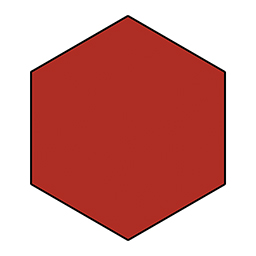
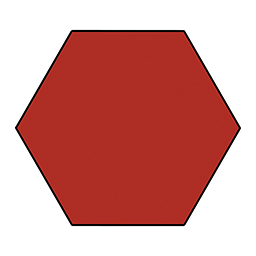
hexagon is a polygon with six sides and six angles. The word "hexagon" is derived from the Greek words "hexa," meaning six, and "gonia," meaning
corner or angle. It is one of the most fascinating and symmetrical shapes in geometry.
A
hexagon is a closed shape, meaning that it has no openings or holes. All six sides of a hexagon are straight and of equal length. The angles within a hexagon also have equal measures, measuring 120 degrees each. The sum of all the angles in a hexagon is always 720 degrees. This makes it a regular polygon, as all of its sides and angles are congruent.
Hexagons can be found in various objects and structures in the natural world and man-made designs. In nature, honeycomb cells created by bees are hexagonal in shape. This arrangement maximizes space and efficiency. Furthermore, some minerals, such as quartz crystals, exhibit hexagonal symmetry due to their atomic structure.
In the man-made world, hexagons are commonly used in construction and engineering. For instance,
hexagon nuts and bolts are widely utilized for fastening materials together, as they provide a secure grip. Hexagonal tiles are often used in flooring, allowing for an interlocking pattern that covers large areas.
Moreover, hexagons have gained significant attention due to their unique geometric properties. The hexagon provides the largest area-to-perimeter ratio compared to any other regular polygon. This is why bees choose to build their honeycombs in hexagonal shapes, as it maximizes the volume of storage per unit length of material used.
In conclusion, a hexagon is a polygon with six sides and angles. Its regularity, versatility, and prevalence in nature and human-made designs make it an intriguing and significant shape in the field of geometry. The hexagon's symmetrical nature and its ability to create efficient structures give it a special place in the diverse world of shapes and patterns.